Showing posts with label Maine. Show all posts

Friday, March 14, 2014

Baxter State Park, Maine

Anyone who climbs and hikes in the Northeast who hasn't heard of Baxter State Park and Mount Katahdin must have had their head in the sand. It's an almost mythological destination with superlatives better suited to mountains in the western United States and a park bureaucracy that makes getting reservations almost as hard as having lunch with the Pope.

And for anyone that has made the pilgrimage to the park, you'll understand just why so many people are in love with the park.

Plus Baxter isn't just Mount Katahdin and the Knife Edge, there's a whole other set of mountains that are just as exciting and interesting throughout the park.

Where is Baxter State Park?

Maybe it's the fact that Baxter is located in the heart of Northern Maine that adds to the allure. It's a long way from everywhere, even from places in Maine! You'll spend about 3 ½ hours getting there from Augusta, somewhere around 4 hours from Portland and somewhere around 6 or 7 hours getting there from Boston, depending on traffic (heck, with Boston traffic, figure 10 hours).

The park is located just to the north of Millinocket, Maine - which is about a ½ an hour to the west of Interstate 95. There are two ways to access the park - the main entrance is the southern entrance just north of Millinocket, while a second northern access is open at the northern top of the park.

There are actually quite a few ways to get to the entrances, either on official state and local roads or via the timber company "paper" roads that crisscross the timber company lands outside of the park. A good map of the area is a must if you're planning on trying any of these more "rustic" trips to the park.

Getting into the Park can be a challenge...

You either need reservations or need to be incredibly lucky to get into Baxter. Bother overnight and day-use is strictly regulated in the park with caps on the number of people that can be in the park at any one time.

Getting reservations can sometimes be like getting Willa Wonka's golden ticket. It used to be that you'd send in your request the week between Christmas and New Years and if it got to the Baxter offices that week, you stood a chance of getting something, but probably not what you originally requested. Sometime in January the park would call you collect and you'd haggle over reservations and eventually end up with something. The only other way to get the reservations was to wait in line that same week at the park headquarters and get a reservation in person. I remember living in Maine and this would be a big news story - the lines of people in Millinocket, waiting for Baxter reservations.

Reservations now, instead of all the reservations for the year going in at the beginning, are rolling. Basically you make reservations 4 months in advance - so you need to plan ahead and get your reservations in at the right time.

For day-use activities, unless you're at the park gate at about 5:30 in the morning (the gate opens at 6), it's not likely you'll get to go to the area you want. There are three major access points for day hikes on Mount Katahdin and Knife Edge (Abol Slide, Katahdin Stream and Roaring Brook) and all three fill up very fast. Once a certain number of people has been reached, the park will not allow other people to go to those lots. Don't think you can sneak in either after saying you're going somewhere else. You must display a day-use pass in your window and it clearly says which parking lot you are supposed to be in. Access points for other parts of the park beyond Katahdin don't fill up as fast, so if your heart isn't set on climbing Mount Katahdin, it's not quite so hard to get into the park for a day.

It's also important to realize that Maine residents get first dibs on both overnight reservations and day-use in the park. A certain number of overnight slots are saved for residents and generally a Maine resident will have an easier time getting into the park for the day. Plus Maine residents pay a reduced day-use or overnight fee in the park.

There are gate fees, day-use fees and fees for overnight reservations, so be prepared to pay. The fees all stay within the park, as the park is a self-sufficient entity that doesn't get its money from the State. The park is completely run off of fees and the income from the trust that Percival Baxter set up when he donated the park to the State.

What you'll find inside the park

There are two major areas in the park. The southern portion of the park contains the Mount Katahdin massif. This is where you'll find Baxter Peak (the northern terminus of the Appalachian Trail), the Knife Edge (a mile long hike along a ridge that in places is only 3 to 4 feet wide), the Great Basin, North Basin, the Tablelands and the Northwest Basin. In the northern portion of the park you'll find somewhat less impressive mountains that are nevertheless, still impressive in their own right. You'll also find a lot more "quiet" areas in the northern portion of the park - it's significantly less crowded and beyond the mountains, there are many stream valleys, lakes, ponds and bogs to explore.

Mount Katahdin

To be honest, Mount Katahdin is the reason that probably 90% of park visitors are in Baxter. The mountain is the highest mountain in Maine, it has a huge area of alpine tundra, the knife edge ridge is like nowhere else in the eastern United States and the North Basin was home to the east coast's last permanent snowfield (it finally melted in the 1800s).

There are several different access points for Mount Katahdin. Day trippers and overnight campers alike can climb to Chimney Pond from Roaring Brook and make a loop out of the mountain. There's day-hiking access up very steep trails from Abol Slide and Katahdin Stream and for campers, a several day trip around Katahdin and up through the Northwest Basin is one of the most amazing trips anywhere in the Northeast.

Most campers book a few nights at Chimney Pond campground (located in the Great Basin, directly beneath the summit of Mount Katahdin and the Knife Edge) and use it as a base camp to hike the Knife Edge and explore the other areas nearby (the Tablelands, Hamlin Ridge, and the North Basin).

The day trips from the other areas are long and steep and don't set themselves up for loops as much as a trip through Chimney Pond would, but they are shorter (7 or 8 miles versus 14 miles for a day-trip loop through Chimney Pond).

The Knife Edge

No trip to Baxter would be complete without a traverse of the Knife Edge. This ridge, located between the summit of Mount Katahdin (Baxter Peak) and Pamola Peak is a mile long, narrow ridge, that in places goes down to about 3 feet wide. At it's narrowest point, an almost sheer cliff drops down into the Great Basin a Chimney Pond for a few thousand feet (it's a bit dizzying).

The ridge is barren, exposed and above tree-line and will test just about anyone. In bad weather (high winds or icing), the park will close the route (they will also close other exposed trails) but even in good weather, the route can be intimidating for some.

Honestly on my first trip across, while I didn't crawl on my hands and knees, I tried to stay as close to the ground as possible and when I got to the narrow section, I was pretty freaked out. It took a lot of nerves to make it that first time and even to this day, I still get a bit weak kneed going across in places. Of course, I've also seen people that literally have thrown themselves against the rocks and are screaming "I can't go on," so I guess I'm not that bad.

The Northern Portion of Baxter State Park

For anyone who's gone to Mount Katahdin, a trip to the northern part of the park is a completely different experience. Forget the over-protective (and zelous) park rangers around Mount Katahdin and the "we need to know where you are at all times attitude," things are more laid back in the north. There are a few major campgrounds and a few overnight backcountry areas. The majority of the mountains and other areas can all be reached by day-trips, including one spectacular mountain called Doubletop.

Unlike almost any other mountain I've been on - Doubletop is, as the name suggests, a mountain with two tops. The two summits are connected by a narrow ridge. Nowhere near as narrow as the Knife Edge, still the ridge is an incredible walk and ends on the northerly summit where it seems like you're standing on the edge of the world - the mountain's summit ends in a large cliff that gives you an expansive view of the entire park.

There are also the Brothers which give you a close-up view of Mount Katahdin, the Traverler, a large, partially trailless peak and several other smaller mountains that are all interesting in their own right.

Beyond the mountains there are several lakes and ponds to explore and for you geology buffs out there, the very northern portion of the park is home to some of the earliest fish fossils ever found. Though don't remove anything if you find it - fossils are protected in the park.

My Park Experiences

I've been in the park several times for both camping trips and day trips (living in Maine had its advantages) and I still love every time I get to go to this park. Mount Katahdin is so intriguing - I would stop take a look whenever I was driving by for work and I still get all excited when I'm coming up from Millinocket to the turn in the road where the Katahdin massif seems to rise from the plain.

While I hate the over-regulated nature of the park, I realize for such a popular place, it's probably the only way to manage the use. You'll still run into crowds, but the park does not seem overused and beat out like other areas in New Hampshire or in the Adirondacks. Baxter has something special and their main goal is to protect that, which is admirable.

There's no "right way" to climb Katahdin or explore the park. No matter where you go or what you climb, I'm willing to be you'll not only enjoy it, you'll be wanting to come back for more.

The Park throughout the seasons

In the late spring, summer and early fall, the entire park is open for overnight and day users. In the wintertime select campgrounds are open.

There is a bunkhouse available at Chimney Pond for winter use, but any parties attempting to climb Katahdin in the winter, you must prove to the park authorities that you are equipped and experienced enough to handle the mountain. There are also extensive rules and regulations for winter camping that should be reviewed before you even considering visiting in the wintertime.

Also in the winter the main access road (from the North Gate to the South Gate) is open to snowmobiles, but the access road from the South Gate to Roaring Brook Campground is only open to skiers and snowshoers (which makes for a very long approach to Chimney Pond).

For More Information

The park maintains a comprehensive website that includes information on reservations, day-use, park regulations, maps, and more. Anyone considering visiting should take the time to check out the site beforehand.

You can also check out the Appalachian Mountain Club's Maine Mountain Guide for the most complete guide and map set to trails in the Park.  National Geographic also publishes a Trails Illustrated Map for Baxter State Park.

Final Thoughts

Baxter State Park is one of those places that everyone should get to experience at some time. You may not be able to make it across the Knife Edge, or get to explore every nook and cranny of the park, but just being there is really an experience. Mount Katahdin is unlike any other mountain in the Northeast and the rest of the park is just as engaging.

Plan well ahead to get into the park and no one will be disappointed by what they'll find once they are inside.

Sunday, March 09, 2014

A Walk In The Park - Acadia's Hiking Guide by Tom St. Germain

$13.00 on Amazon
Have a vacation to Maine's Acadia National Park planned and want to go hiking while you are there? A very useful reference for your hike planning would be Tom St. Germain's A Walk in the Park, Acadia's Hiking Guide. In this small book, St. Germain provides a really good overview of the hiking opportunities in the park and has produced a reference guide that should well serve all but the most ardent explorers of Acadia National Park.

The book is an excellent reference guide and provides trail descriptions, maps and elevation profiles of each of the hikes. The book couldn't possibly describe all the trails in Acadia and remain the size that it is, so the main hikes in the region are chronicled, along with information on the other trails, especially with maps showing all of the trails in a certain area.

Book Basics 

There are five main sections to the book, which correspond to different areas of Mount Desert Island, home to Acadia National Park. The sections are:

The Bar Harbor Region
The Ocean Drive Region
The Jordan Pond Area
Western Mountain
Somes Sound and Seawall Hikes
The sections basically work from east to west across the island and cover the vast majority of the park where you will find trails.

Within each of those sections you'll find descriptions for the major trails in those areas. Each section averages about fifteen or so trail descriptions with a few having a couple more and the others having less. The most trails are described around the Bar Harbor area and the Jordan Pond area. Those with the least include the Ocean Drive region and the Somes Sound area.

In addition to the trail descriptions, the book includes a short introduction from the author talking about his experiences in Acadia along with an index to all the hikes and a glossary for all the trails. I thought the glossary was an interesting touch – something I hadn't seen in any other guidebook. Basically every trail in the book has an entry and there's a one sentence description of the trail following its name. Think of it as cliff notes for trails.

Trail Descriptions 

Of course the trail descriptions are really what make this book. I've found them to be very helpful, for both planning hikes and as a resource as you are hiking. That's because the trails of Acadia can be very dense – trail junctions are all over the place and there are multiple trails diverging from various places. Thus you need to have a good map and guide with you to make sure that you are staying on the hike that you wanted to complete in the first place.

With A Walk in the Park this is easy to do. The description does a good job at giving you an idea of what to expect on the trail. It'll describe the walk itself, what you are going to see on the hike and where to go when you come to various trail intersections. The maps are just as good, if not better. They show the topographic relief of the area along with the roadways, town areas, parking and the other trails in the area. There's also a locus map which shows you whereabouts on Mount Desert Island the trail is. My favorite reference though is the vertical profile on each trail description. This shows you how much elevation you are going to gain and lose while you are hiking and gives you a good idea of what to expect beyond the map and the description while you are hiking. In addition, a few of the descriptions include small black and white photographs of sights along the trail.

Experiences

Every time I get to Acadia I make sure to take at least one hike since you really can't have a bad hiking experience in the park. All of the trails are just that amazing. However I like to plan ahead and Tom St. Germain's A Walk in the Park does a really good at making that easy. I can find, figure out what to expect on the hike and find its trailhead and parking via the included maps.

I really like the book and considering the number of trails in the Acadia region, St. Germain has done a good job at providing descriptions for the best of the bunch.

Final Thoughts 

I would recommend this book for anyone traveling to Acadia National Park who is looking to do some hiking. You'll most likely be completely bewildered without a guidebook and for an introductory guide to many of the Park's best hikes, definitely pick up a copy of Tom St. Germain's A Walk in the Park, Acadia's Hiking Guide, you won't be disappointed.

More information on Hiking in Acadia National Park at Adventures in the Outdoors.

Wild Gardens of Acadia | Acadia National Park, Maine

If you don’t have the time or the ability to visit all of the various ecological zones of Acadia National Park, but still want to get an idea of the various types of plants throughout the park, then stop by The Wild Gardens of Acadia. These gardens are host to native flora of Acadia, from the ocean to the tops of the mountains.

While I’m sure that not everyone wants to learn about all of the plants in Acadia, the Wild Gardens should interest just about everyone, if only to get an idea of the variety in flora that the park supports. Not only that, but the gardens themselves are quite nice too look at and depending upon the time of the year you arrive, may have quite a number of plants in flower.

Getting There 

The Wild Gardens of Acadia are located adjacent to the Sieur de Monts Spring area.

The Sieur de Monts Spring area is off of the park’s main loop drive and is also accessible from Route 3 where it crosses the loop drive nearby. Both the spring and the Wild Garden area are well signed, both on the loop drive and on Route 3. There is parking provided along the roadway to the site, but during busier times it does tend to fill up and parking is allowed along the side of the roadways. For the thinnest crowds, try to hit the area early in the morning or later in the afternoon, as the parking and the crowds tend to be lighter, especially on weekends.

The vast majority of the people visiting the Sieur de Monts area are visiting the nature center, the spring and the Abbe Museum, which leaves the Wild Gardens a bit quieter and a nice place to take some time to walk around and explore.

What do you get when you visit? 

Upon entering the garden, a small brochure is available that describes the various habitats and the plants that are found in each of those habitats. The garden is broken up into 12 different habitat ‘zones’ that represent each of the major habitats found in Acadia National Park. The zones include:

Mixed Woods
Roadside
Meadow
Mountain
Heath
Seaside
Brookside/Damp Thicket
Bird Thicket
Coniferous Woods
Bog
Marsh
Pond

Small paths travel throughout the garden and serve as delineators, separating the various habitats from one another.

For those without much botanical background, I think the most interesting aspect of the gardens is the way that they show the diversity of the park. You go from the plants that grow right along the seaside to the plants at the tops of the bare rock summits and everything else in between.

Kids will likely enjoy the Bog habitat where they can find the native insectivorous plants. The sundew, bladderwort and pitcher plant are all there and if you can find yourself a fly or a mosquito, you can feed it to the plant.

For those with stronger botanical backgrounds, it’s interesting to see all the various plants and habitats brought together in a relatively small area, whereas in nature they are generally not found together. It can also be fun to try to identify as much as you can without cheating and looking at the labels that are on representatives of most of the plants in the garden.

There are benches scattered throughout the gardens so people can sit and rest or just take in the surrounding gardens.

An interesting thing to note is the clarity of the water in the stream that travels along the western and northern edge of the gardens. It’s the outlet of the Sieur de Monts Spring and is crystal clear.

Is it worth a stop? 

I have been to the Wild Gardens, once in the early spring before the majority of the plants were growing and then once again with my partner in the early fall. Both times, we spent a good amount of time walking around the garden, looking at the individual plants and the habitats in general. When I was there in the fall, my partner and I spent almost an hour wandering through the garden, mostly because he wanted to be able to identify as many plants as possible, which turned out to be quite a challenge since not everything is labeled and my plant identification skills have rusted up a bit since college. However, we both had a really good time and the gardens were a great place to just wander and enjoy each other’s company.

The gardens are free to visit with your park pass. However, should you want the brochure, a small donation is suggested to help defray the costs of production since the brochure is put together and published by the Garden Club of Mt. Desert, who also maintain the gardens.

Final Thoughts 

A trip to the Wild Gardens of Acadia makes a great stop on your tour of Acadia National Park. You can spend as much time as you want wandering through the gardens, exploring the various habitats and native plants of the park, all in one spot.

Sieur De Monts Spring and the Wild Gardens of Acadia - Acadia National Park, Maine

If you’re visiting Acadia National Park, one stop you can’t miss is Sieur de Monts Spring, which is home to a nature center, spring house, hiking trails and the Abbe Museum. In addition, the Wild Gardens of Acadia are next to the site.

The Spring makes a great stop as you travel along Acadia National Park’s drive and gives you a chance to explore both the natural and human history of the Park.

Where is it? 

Sieur de Monts Spring is off of the park’s main loop drive and also accessible from Route 3 where it crosses the loop drive. It’s well signed, both on the loop drive and on Route 3. There is parking provided along the roadway to the site, but during busier times it does tend to fill up and parking is allowed along the side of the roadways. During those times, it can be quite a walk from your car to the site.

For the least crowds, try to hit the area early in the morning or later in the afternoon, as the parking and the crowds tend to be lighter, especially on weekends.

What’s there? 

Sieur de Monts Spring is home to the spring itself, a small nature center, the Abbe Museum, several hiking trails and adjacent to the site, the Wild Gardens of Acadia are accessible.

When you park along the access drive, you first encounter the nature center. This center, run by the National Park Service showcases the nature of Acadia National Park with dioramas, exhibits and stuffed animals you can look at and touch. There are also rangers on duty to answer any questions and who offer interpretive presentations throughout the day during the tourist season (Memorial Day through Columbus Day).

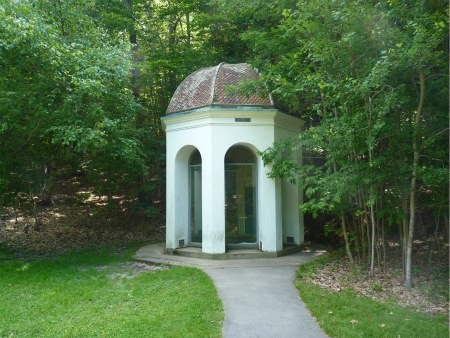
Leaving the Nature Center, the Wild Gardens of Acadia are off to your right, but you continue along the paths, walking by the outlet of the Sieur de Monts Spring. Continuing on you come to the spring itself, which is encased in a canopy that protect that spring. This canopy was built by George Dorr in early 1900s, and he was the one who carved “Sweet Waters of Acadia” on the boulder next to the spring house. From the spring, the waters drain to the small stream by the Nature Center and then continue on down through the Wild Gardens of Acadia and into the valley beyond.

From the spring house, there are two routes to explore. One takes you to the hiking trails that radiate away from the area. The most impressive of these trails is probably the Dorr Mountain Trail, which was built in the early 1900s and features numerous stone steps and staircases up the side of the mountain, which the builders hoped would allow anyone to be able to reach the summit of the mountain. You don’t have to walk very far to find some of these steps, which are well worth the short walk because of their impressiveness. If you are going to hike Dorr Mountain, it’s advisable to bring plenty of water and wear good hiking boots, as even though the trail is very well constructed, it’s still quite a climb to the summit of the mountain. The other trails are equally well constructed and any of them make for an interesting hike. Should you be interested in hiking, I’d suggest you pick up a copy of a hiking guide to Acadia (they’re available in almost every gift shop in the park) - which will provide a map and descriptions of all the trails in the area.

In addition to the hiking trails that radiate away from the Sieur de Monts Spring, you can visit the Abbe Museum, which is just up the hill from the spring and is an easy walk for anyone. The museum showcases the Native American history and culture in Maine.

There’s a small admission fee for the museum, which also gets you into the Abbe Museum location in downtown Bar Harbor. The museum is fairly small – and is located within a round building, so you can enter and then work your way around the museum. Displays, exhibits and dioramas are present in order to explain and illustrate the various pre-historic periods and the Native American culture – there are over 10,000 years of human history is presented in the museum There’s also a small gift shop that sells Native American goods and other items such as books on the natural and human history of the area.

There are full bathroom facilities next to the Nature Center.

How long will I spend there? 

Depending upon how interested you are in the various portions of the Sieur de Monts Spring area, you can probably spend anywhere from about an hour to a full day (if you decide to go hiking up Dorr Mountain). To really view the nature center, the spring and the Abbe Museum, plan on at least 2 hours of time. If you also visit the nearby gardens, tack on another hour and if you go on any longer hikes, expect to spend several hours climbing the mountain.

Experiences 

On my latest visit to the area, my partner and I spent the better part of one of our afternoons in Acadia at the Sieur de Monts Spring area. We were visiting on Columbus Day Weekend and while the park was busy, it wasn’t overwhelming. At the Sieur de Monts Spring parking was tight and we ended up parking down the road a distance and walking back. At the nature center we browsed through the exhibits and then sat in on a nature talk by one of the rangers. Following that, we walked up the spring, up the Dorr Mountain trail a short distance and then over to the Abbe Museum where we spent a good amount of time going through the exhibits and browsing the gift shop.

Is it worth visiting? 

I think the answer here is an unqualified yes. The nature center, the spring and the hiking trails are all open to the public and the small admission fee for the Abbe Museum is well worth the price.

While it might be busy at times, especially on the weekends, you really shouldn’t skip this area as part of your tour of Acadia National Park. It gives you an opportunity to learn about the natural and human history of the park through the nature center and the Abbe Museum. There’s also an opportunity for hiking and if you visit the nearby Wild Gardens, you can learn about all of the plant life living in the park.

Final Thoughts 

Don’t skip a visit to the Sieur de Monts Spring if you are visiting Acadia National Park. It’s an easy stop along the Park’s loop drive and is well worth the time.

Bar Harbor, Mount Desert Island, Maine

The village of Bar Harbor is located on Mount Desert Island in Downeast Maine and is the gateway to Acadia National Park.  It offers lots of options for shopping, dining and lodging and it makes for a great place to start your Downeast vacation.

One thing I really like about Bar Harbor and all of Mount Desert Island is the lack of runaway commercial development.  Sure there are plenty of shops, restaurants and stores, but they are all part of the community.  You won't find any Walmarts, McDonalds or anything else like that in Bar Harbor or on the entire island.  It's a refreshing escape from that seemingly endless strip commercial development you find elsewhere.

We visit Bar Harbor and Acadia almost every year and we have almost always ended up staying close to the downtown area of Bar Harbor.  There are hotels further out that are less expensive, but you are further from the all the services of downtown.  We generally stay right on the outskirts of the downtown area.  The hotels are slightly less expensive and you don't have to deal with the hustle and bustle of downtown whenever you want to leave and go to the rest of the island.

How do I find Bar Harbor?

Bar Harbor is actually quite easy to find.  Taking Route 3 south from Ellsworth on the mainland, you'll cross over onto Mount Desert Island and then several more miles south you'll enter the village area of Bar Harbor.  Route 3 skims around the downtown core of the village and then cuts through the southern portion of the town, passing by the common area.  From Route 3 there are a number of side streets that travel into the downtown area.

It's about an hour or so south of Bangor, 3 hours from Augusta and about 5-6 hours from the Boston area.

Parking is probably the biggest headache for Bar Harbor.  The majority of parking is of the on-street type except for a parking area on the pier on the waterfront.  However during busy times, it's almost not even worth seeing if there is a parking spot down there.  In the off-season, you can pretty much park anywhere, but during the busier season if you luck out with a spot that's close to downtown, you're really lucky.  We usually end up parking a fair distance away and having to walk in.

What's in Bar Harbor?

Lacking the typical strip development you'll find elsewhere, Bar Harbor is filled with unique shops, restaurants, stores and galleries.  There is a little of everything for everyone I think.  We walk around and browse various shops (which do have their share of touristy stuff), check out the various art and furniture galleries (and wish we had more money) and always enjoy our meals in town.

The vast majority of the shopping is centered on the downtown area just uphill from the waterfront along Main Street and off a few of the side streets from there.  Beyond that initial downtown area, there are other stores and restaurants scattered through the village, including north and south along Route 3 on the outskirts of town.

Since we've visited Bar Harbor many times, we don't spend hours wandering around the village, but we have our favorite restaurants and shops that we like to check out.  If you are visiting the area for the first time, I'd think it would take at least a few hours to walk through the entire village area.  That also includes quite a bit of walking, so make sure that you wear comfortable shoes.

Where to stay in Bar Harbor?

There are a number of hotels and inns within the village of Bar Harbor.  These tend to be the most expensive places to stay in the area, but they offer the convenience of being right in the downtown area and you won't need to drive or find a place to park to go out shopping or eating. 

We actually have never stayed in the immediate downtown area, just because it's so expensive for a room.  However, I would like to at some point, especially during the busy season, since you wouldn't have to search for parking or walk miles from a parking spot to get into the downtown area.

On the outskirts of town there are plenty of other less expensive options for lodging.  Not all are within walking distance of downtown (a mile or two), but to the north and south of the village on Route 3 are a number of hotels, motels and inns.  There are also a number of restaurants in these sections, so you won't necessarily have to go all the way into town to eat.

On most of our visits to the area, this is where we stay.  We spend most of our time in Acadia, so this provides us with easy access to the park without having to deal with the downtown area.  However we're close enough that it's either a quick drive or a longer walk to the village.  In general, we just drive, since the majority of hotels are at least a mile or so from the downtown area.  However with the restaurants that are in this area, especially on the north side, you don't always need to go into the downtown area.

Acadia National Park

Bar Harbor is the gateway to Acadia National Park.  The main entrance to the park is about 2 miles or so from the downtown area, but you can reach the park from a number of roads that leave the village area and go across the island.  

Everything in the park is reachable from the Bar Harbor area once you get on the park roadways.  I have always found that the Bar Harbor area makes for a good base to explore the park.  We always go to the grocery store on our first day there and stock up on cold cuts and bread so we can make sandwiches (if our hotel has a fridge in the room) and we can be out biking and hiking in the park all day.  Then we come back to our hotel, relax, clean up and hit Bar Harbor for dinner and entertainment.

Things to note...

If you want to stock up on groceries or other items like that, there's only one grocery store in Bar Harbor.  We generally stop at the Walmart or one of the grocery stores in Ellsworth before coming on to the island.  That way we can get some soda and other things to last us while we're on the island (plus we don't have to pay island prices).

There aren't too many "cheap" dining options in Bar Harbor beyond a sandwich shop, a Chinese restaurant and a few pizza places.  The majority of the restaurants are more upscale dining and the prices and representative of this.  That's why we just often use the cold cuts for sandwiches and skip having lunch in town.

Bar Harbor hosts cruise ships in season, so from time to time you'll see a large cruise ship come up into the harbor and the town will quickly be inundated with visitors from the ship.  This can make it very hard to find a place to eat or even get into some of the shops.

The Busy Season and the Off-Season in Bar Harbor

Talk about a tale of two cities.  Visiting Bar Harbor in the summer and the winter is like visiting two different villages.  The summer tends to be very crowded, busy and bustling, while the winter is much quieter and only a handful of shops and restaurants are open.

We've visited during both periods and both have their pluses and minuses.  I like the off-season because you can go anywhere and do anything without lines.  The park is still open if the roads are snow-free and you don't need reservations and you won't have to worry about any lines in Bar Harbor.

Final Thoughts

I really love Bar Harbor.  It's quaint, it's comfortable and it offers a lot for my partner and I.  We always enjoy our vacations to Mount Desert Island and we always stay in the Bar Harbor area.  On every trip we spend plenty of time in the downtown area and we never get tired of it.  Not only that, but it's the perfect place to start your adventures on the rest of the island.

If you're looking for an interesting place to stay in the Downeast region of Maine, check out Bar Harbor on Mount Desert Island.  You won't be disappointed, I know I never have been.

Acadia National Park, Mount Desert Island and Bar Harbor

I love Acadia National Park. Maybe it's because I love Maine, but there's definitely something special about this park and its amazing scenery. The park is located along the Maine Coast on the Schoodic Peninsula, on Mount Desert Island and on Isle Au Haute. However the majority of the park is on Mount Desert Island and that is where we spend most of our time since there are almost 200 miles of hiking trails, the miles of coastline to explore and the village of Bar Harbor to enjoy.

Not only that, but Acadia National Park is America's easternmost National Park you can watch the first rays of sunshine hit the United States on the summit of Cadillac Mountain. Simply put, in my mind, Acadia is an outstanding park and should not be missed!

My History with Acadia

I had lived in Maine for almost a year before I first visited Acadia and realized what I had been missing all that time (even though I lived about 2 1/2 hours from Acadia up in the Greenville area). Acadia is one of those magic areas that when you are there, you quickly realize how wonderful it is that the area is protected by National Park status. Now that I'm not living in Maine, but in Massachusetts, I still try to get up there and I stop by every time that I'm in Maine.

On my first trip to Acadia, I toured and trekked through the park in mid-April and found that there were almost no crowds at even the most popular destinations in the park. While the days weren't all that warm and the weather wasn't perfect, the park was still there in all of its glory. If anything, it was even better because there were so few crowds. Wherever you wanted to go, you were able to get there with little or no trouble. No traffic jams, no shuttle buses, you did what you wanted when you wanted.

Even Thunder Hole, one of the must sees in the park and one of the most famous locations in the park, had maybe 20 people at any one time there while we were there. We were able to get right down to the edge of the rocks and experience, without the pushing and shoving crowds, what makes the area special. We even managed to get hit by several breaking waves as they crashed through Thunder Hole. The bad weather made it even more interesting, as the storm was whipping up the ocean, so the waves were even bigger than normal.

Since then I've visited Acadia several more times at different times of the year. Each has its pluses and minuses. In the summer months all of the attractions are open, as are all the store and restaurants in Bar Harbor and surrounding villages. However hotels are very expensive and just about everything is really crowded. Spring tends to be stormy and in a snowy winter, you'll have to wait for the snow to melt to do a lot of the hiking. The area during the early fall is almost as crowded as the summer months since everyone is looking at the changing leaves, but later in the year, like in November, the park empties out and if it hasn't snowed yet, just about everything is still open park wise (trails and attractions). However the shops and restaurants tend to close up in Bar Harbor and the other towns.

Visiting Acadia

Depending on when you decide to go to the park, your options for taking in Acadia change. In the spring or in the late fall you can really take your time explore the park without any crowds. This includes the trail network and the attractions like Cadillac Mountain and Thunder Hole. During the summer months exploring on this level is difficult, if not just impractical, since nowadays in the height of the tourist season, most roads within the park are really crowded. The only saving grace is that there are shuttle buses that run from the hotels and campgrounds in Bar Harbor and Ellsworth into the park so that you don't need your car at all. This is all in an effort to reduce air pollution in the summertime at the park. In the winter time most of the park is not easily accessible since not all the park roads are plowed. This includes the Cadillac Mountain Road and most of the park roads except for a portion between Sieur de Monts and Blackwoods Campground. The rest of the roads are open to walking and skiing, but that can make for long approaches for some of the mountain hikes.

Things to See

While at Acadia you have to take the drive (or hike if you are up to it) up Cadillac Mountain. The view is awe-inspiring and the drive itself can be quite an experience (especially for those with fears of exposure and heights). The road is well maintained and is not difficult to drive, however, in several places, you just look out into the wide open as you are coming around a turn. Nothing at like the Mount Washington Auto Road, but it is a really interesting drive none-the-less. Part of the reason that Cadillac Mountain is impressive is because it is right next to the ocean. So even at its somewhat short height, you are looking down over 1,000 vertical feet of relief to the ocean. The mountain will give you excellent views across the park and to the surrounding areas.

Another great spot is The Beehive, which is a small mountain right across from Sand Beach. The hike is maybe at most, a ½ a mile, but it climbs up and over what could be considered by some to be a cliff. There are ladders and steel cables bolted right into the mountain along the trail,, so that people without technical climbing experience can make their way up. The views are great, the exercise gets your blood pumping and you can make quite a few hiking loops from the top of The Beehive to get back down to your car at Sand Beach.

Sand Beach itself is also worth a visit. This is one of the few sandy beaches on the coast and while it is open for swimming, the water is very cold, even at the height of the summertime. Most people just enjoy the sun on the beach and skip going into the water.

For people less interested in climbing mountains and who want to enjoy a stroll along a wooded path or a bike ride down some nice bridle paths, there is a very extensive system of very well maintained bridal paths (originally horse and carriage roads) that are open to walking and biking that go around almost the entire park. You can ride your bike on them, walk on them and take horses on them. There are stables in the park where you can get a horse too.

The Schoodic Peninsula, which is about a an hour and a half drive from Bar Harbor and the main portion of the park is the only part of Acadia on the mainland of Maine. It's about 45 minutes to the east on Route 1 from Ellsworth and is worth the drive if you have the time. A single solitary ocean drive makes its way around the tip of the peninsula offering vistas across the bay to Mount Desert Island and up the coast to the east.

There are a ton of hiking opportunities in the park, which has almost 200 miles of trails. These trails explore just about every corner of the park and make for some great day trips. There is no overnight camping in the backcountry though, so all of your hikes have to be day trips. In the summertime the shuttle system makes its easy to link together trails for longer hikes since you don't have to worry about coming back to where your car is. Some of my favorite hikes include the Beehive, Penobscot Mountain and Beech Mountain. The trails are all very well maintained and thanks to the work of the CCC back in the 30's the quality of the trails in places is simply amazing. One trail literally is made of thousands of granite steps up the steep face of a mountain.

The Jordan Pond House is worth a stop when it is open. They serve lunch and dinner within the park and are famous for their afternoon tea that is served at tables that are on the lawn of the house. It makes for an incredible experience, either dining there or having tea surrounded by the mountains of Acadia.

Sieur de Monts Spring is home to the spring itself, a small nature center, the Abbe Museum, several hiking trails and adjacent to the site, the Wild Gardens of Acadia are accessible. The Spring makes a great stop as you travel along Acadia National Park's drive and gives you a chance to explore both the natural and human history of the Park.

While I'm sure that not everyone wants to learn about all of the plants in Acadia, the Wild Gardens of Acadia should interest just about everyone and if you don't have the time or the ability to visit all of the various ecological zones of Acadia National Park, but still want to get an idea of the various types of plants throughout the park, then stop by the Wild Gardens of Acadia. These gardens are host to native flora of Acadia, from the ocean to the tops of the mountains.

Bar Harbor and Downeast Maine

While at Acadia you will have to stop in the nearby town of Bar Harbor to get a flavor of the region. While Bar Harbor is a richer version of Downeast Maine culture in general, it is an interesting and fun place for those who want to explore. Don't forget to stop in a seafood restaurant and get a taste of some Maine "Lobstah." You won't be able to go wrong, because they are all great (and that's coming from someone who doesn't even like seafood, but never found a place his friends didn't like when he took them down there).

If you want to experience true Downeast culture, I would suggest a trip further east, out towards Machias, the unorganized townships that include Trescott and ultimately, at the very eastern tip of Maine, Lubec. Don't expect to find the kitschy shops and trendy restaurants of Bar Harbor, expect to find the true spirit of the Downeast area. It's an experience worth having and is one that very few people are lucky enough to experience (I was lucky because I got to cover the Downeast region for a year when I was working in Maine. Even though I worked out of Augusta, I was still up there as much as I could).

Camping and Lodging

There are campground facilities in the park for those wishing to stay (reservations are recommended and probably almost impossible to get in the summer unless you book way in advance), along with private campgrounds and hotels outside of the park in the Bar Harbor area and surrounding towns. In the summertime, just about everything is booked up, so without reservations, you are out of luck. I was down there once and the closest available hotel room was in Bangor, almost 2 hours away.

Dining

The only restaurant in Acadia National Park proper is the Jordan Pond House. There are also a few shops that sell some snacks and water. The rest of the dining is located in Bar Harbor and the other nearby towns. Bar Harbor has the most with everything from deli's and pizza places to fine dining restaurants. You should be able to find almost anything. Reservations are generally needed in the summer unless you want to wait a while. In the off-season, some places close, but generally there's no waiting for the remaining restaurants.

Final Thoughts

So I'd say if you live in the area, or are planning a trip to Maine, Acadia National Park has to be on your list of must-see places. While I love Acadia in the summertime, if you really want to get a good look at the park, I would shoot for visits in the spring or the fall to beat the crowds and to take the hassle out of your trip.

Otherwise if you are going in the summertime, prepare for some crowds, but even with them, you'll love the park.


Sunday, January 13, 2013

Maine Mountain Guide

Maine Mountain Guide - Guide To All of Maine's Trails 

Much like AMC’s guide for New Hampshire’s White Mountains, the Maine Mountain Guide is an extensive and exhaustive review of hiking trails open to the public throughout the entire State of Maine. 

I’ll admit it, after two years of being here in Massachusetts, I do long to go back and live in Maine. Not only did you have coast with places like Acadia, but then there were the rivers and finally the great north woods with it’s various mountain ranges. From the Rangeley area in the west to mountains surrounding Moosehead Lake and finally to the majesty of Katahdin – Maine offers an awful lot of varied hiking opportunities. 

The Maine Mountain Guide covers all of these areas, from the coast to the mountains. Areas covered include: 

Katahdin Area 
Aroostook 
Piscataquis Mountains 
East of the Penobscot 
Camden Hills 
Southwestern Maine 
Oxford Hills 
Grafton Notch and Mahoosuc Range Areas 
Weld Region 
Rangeley and Stratton Area 
Kennebec Valley 
Mount Desert Island and Acadia National Park

The book also includes a key to the included maps, an introduction to hiking in Maine, along with a glossary, a sample accident report should you need it, an extensive index and finally information on the Appalachian Mountain Club, who publish the book. 

Each area is first introduced in the chapter, then each trail description goes into almost minute detail about the hike you will have on that trail. Major features along the trail are described; as are steep pitches, trail junctions, side trails and more. It is as if the descriptions were written as someone was walking the trails, they are that accurate and detailed. The descriptions also contain information on the vertical elevation you will be gaining and losing on the hike, the mileage for each trail and an estimated trip time for that trail. 

Seven maps are included with the book and they cover all of the regions that are discovered and show all the trails described in the text. The maps are of a small scale, clear and easy to read and use. They also fold up small enough to fit in your pocket. 

The book is fairly small and can easily be packed in your backpack or kept in a glove compartment in a car should the urge to go hiking grab you. 

As with other AMC titles, the Maine Mountain Guide has one of the best indexes I’ve ever seen. This index is indispensable for finding various trails and mountains. Have a mountain name but no trail name, no problem, have part of a trail name, no problem. The index literally references everything in this book. 

Who Needs This Book 

Anyone hiking further than the parking lot around the car would be well off to get himself or herself a copy of this book. Just about every trail in Maine is described, as are all the important hiking areas. The book is both an excellent introduction to hiking in Maine and a trustworthy reference for experienced hikers. 


Appalachian Trail Guide to Maine

$21.13 on Amazon
And Hiking Maine Makes 281 Miles Out Of 2100!

Covering what is arguably the most remote section of the Appalachian Trail, the Appalachian Trail Guide to Maine is the ultimate guide for anyone who is looking to strike across Maine’s wilderness from the New Hampshire border to Mount Katahdin on the Appalachian Trail. 

The Appalachian Trail stretches roughly 2,100 miles from Springer Mountain in Georgia, along the spine of the Appalachian Mountains to the summit of Mount Katahdin in Maine. Along the way the trail travels over some of the roughest terrain of the Appalachians and explores the last vestiges of wilderness that are left along the eastern coast of the United States. The trail itself is a National Scenic Trail and is owned by the National Park Service and managed by the Appalachian Trail Conference (ATC). ATC publishes guidebooks for each state that the trail travels through. 

What’s in a Appalachian Trail Guidebook? 

Each guidebook is similar and provides thru-hikers (people who complete the entire Appalachian Trail on one long hike), backpackers and daytrippers and excellent resource for any size trip along the Appalachian Trail. 

The Appalachian Trail Guide to Maine covers the entire 281-mile length of the trail in Maine. From the Mahoosuc Range in the south to the windswept and tundra covered summit of Mount Katahdin. 

The book includes 7 separate maps that cover the entire length of the Trail in Maine. The chapters in the book are keyed to these maps to make it easier to find the trail descriptions or maps of the section that you are considering hiking. The maps are printed on tear-proof and waterproof paper and are of excellent quality. In addition to a topographic map with the trail route shown, you are also given a vertical relief map (to show you how much you have to go up and down along your route) and on the back of each map, a quick guide to the trail that is broken down by the mileage from landmark to landmark. This makes it unnecessary to carry the book with you when hiking, the map has all the information that you will need. Because they are waterproof and tear-proof, they are very easy to fold up and slip into your pocket without having to worry about damaging the maps. Should you want the security of the entire book, it is fairly small and can easily be packed in your backpack 

Each section is first introduced by an overview of the entire section that corresponds to the map. Then the trail descriptions for each sub-section of trail (generally broken up by road crossings) are given. The book begins at Katahdin and works its way south to the Maine-New Hampshire border. The descriptions include information on the location of the section, it’s length, the estimated hiking time, any elevation gain or loss, lean-tos and campsites that are available in that section, road access to the section, side trails, any points of interest along that section and suggestions for further reading should you want to know more about an area. 

The trail descriptions for each section go into some detail about the hike you will have on that trail. Major features along the trail are described; as are steep pitches, trail junctions, side trails and more. The descriptions are accurate and detailed and easy to follow. 

In addition to the trail descriptions, the Appalachian Trail Guide to Maine also includes several different chapters that cover basic information about the development and management of the Appalachian Trail, what hikers should be bringing when on the trail, a natural history of the Trail in Maine, a complete index that makes finding sections easier and an accident report form should the worse happen you or a hiking partner when out on the trail. 

Who Needs This Book 

Anyone who is considering hiking different sections, or the entire Appalachian Trail through Maine should get their hands on this book. The Appalachian Trail Guide to Maine provides the ultimate reference guides for hikers by providing quality trail descriptions and high quality maps that make planning your trip and carrying it out as easy as possible. 

The book is both an excellent introduction to the Appalachian Trail in general and especially for the Trail in Maine. 


Saturday, January 30, 2010

Bar Harbor, Maine

The village of Bar Harbor is located on Mount Desert Island in Downeast Maine and is the gateway to Acadia National Park. It offers lots of options for shopping, dining and lodging and it makes for a great place to start your Downeast vacation.

Read my full review of Bar Harbor, Maine on Epinions

Thursday, September 11, 2008

The Chart Room Restaurant - Bar Harbor, Maine

I've been to Bar Harbor quite a few times and each time as I was about to get to town, I would drive by the Chart Room on Route 3 as I went past Hulls Cove. The restaurant is situated right along the shoreline and offers both indoor and outdoor dining with a great ocean view.

On those drives, I often wondered how good the Chart Room was.

I discovered the answer to that question on my last visit to Mount Desert Island and Bar Harbor. My partner and I set aside an evening to come to the Chart Room and try a meal.

What we found was a nice overall dining experience, a tremendous view and generally, decent food. There were a few things to nitpick about, but in general, we both liked the Chart Room.

Read my full review of the Chart Room Restaurant in Bar Harbor, Maine on Epinions

Thursday, September 04, 2008

Ellsworth, Maine

While most people wouldn't visit Ellsworth, Maine by itself, it definitely does stand in as the gateway to Mount Desert Island, Bar Harbor and Acadia National Park. In that regard it offers services that you can't find on the island.

Sitting at the intersection of Routes 3, 1 and 1A (along with two smaller routes), you have to travel through Ellsworth to continue on Route 3 south to Mount Desert Island or to the west along Route 1 to reach the Downeast area of Maine.

I doubt that anyone would really be amazed by Ellsworth. It is a pretty basic kind of town that offers everything a hub within a touristy area would be expected to have. There are fast food restaurants, outlet shopping, department stores, traditional restaurants and the ever present Wal-Mart. The thing is though, besides traditional restaurants and some shopping, Ellsworth is your last stop if you need to pick something up at Wal-Mart or want a Big Mac before you head out on to Mount Desert Island. Those things, thankfully, aren't located out there within Acadia National Park and Bar Harbor.

Read my full review of Ellsworth, Maine on Epinions